Hotel Direct Bookings vs OTAs: Loyalty, Story & AI

By Adrian
For years, the hotel industry operated under a simple belief:
OTAs own digital. Hotels compete around the edges.
That mindset shaped everything including marketing budgets, website investment, even how hotels thought about their own brand.
But that world has changed. Fast.
According to recent insights from Boston Consulting Group, digital direct bookings have almost reached parity with OTAs globally — a moment that would have seemed unrealistic even five years ago.
And the most interesting part?
The drivers behind this shift aren’t new. They’ve been sitting in plain sight the whole time.
The $4 Billion Gap That Changes Everything
BCG’s latest data shows:
-
$262 billion in digital direct bookings
-
$266 billion via OTAs
That’s not a dominance story anymore.
That’s a statistical tie.
And importantly this is digital only, the exact space OTAs were built to dominate.
For hotels, this isn’t just a milestone.
It’s proof that direct is no longer a secondary channel - it’s a primary revenue driver.
What Actually Closed the Gap?
This didn’t happen overnight. It’s been a decade of compounding improvements but the key drivers are incredibly clear:
1. Loyalty Became a Distribution Channel
Loyalty programs are no longer just retention tools.
They are now powerful booking engines.
-
Member-only rates
-
Exclusive perks
-
Points and status benefits
These create a structural reason to book direct something marketing alone could never achieve.
Large hotel groups nailed this early. Independents are now catching up with:
-
Modern booking engines
-
Built-in loyalty tools
-
Smarter rate strategies
2. Member Rates Changed the Game
Let’s be blunt:
Price parity was never enough.
Member rates gave hotels a way to:
-
Undercut OTAs (legitimately)
-
Reward direct behaviour
-
Shift customer habits over time
This is one of the most underutilised levers we still see today, especially in the independent space.
3. Better Storytelling on Hotel Websites
This is where things get really interesting.
The shift wasn’t just technical - it was emotional.
Hotels that invested in:
-
Strong visuals
-
Clear positioning
-
Experience-led content
…started to win.
Because travellers don’t book rooms.
They book experiences.
And OTAs?
They’re still largely transactional.
Now Enter AI - The Real Disruption
Here’s where things accelerate.
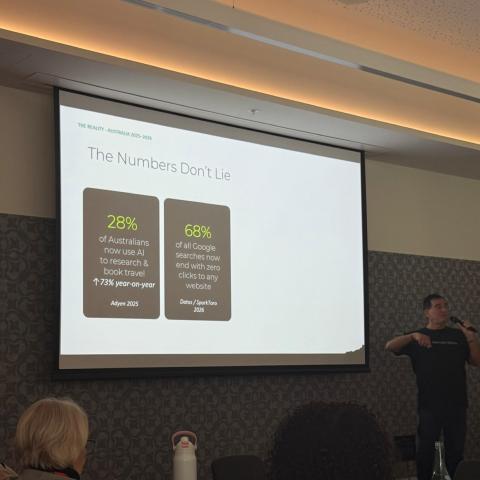
BCG reports that 37% of travellers are already using AI to plan and book travel.
That number will climb quickly.
And AI changes the game in two very different ways.
Scenario 1: Hotels Win (Again)
If hotels get this right, AI could further close or even flip the gap.
Why?
Because AI tools favour:
-
Structured, well-organised content
-
Direct integrations (APIs)
-
Clear pricing and availability
-
Rich, descriptive experiences
In other words:
AI rewards the hotels that have invested in their direct ecosystem.
We’re already seeing early signals of this with major hotel groups surfacing member rates directly inside AI platforms.
This is exactly what we mean at Fastrack when we talk about:
AI-Discoverability
If AI can’t find you, recommend you, and access your inventory…
You simply won’t be booked.
Scenario 2: A New Wave of Intermediaries
But there’s another side to this.
AI could also reintroduce a new type of middleman.
Think:
-
Banks (Amex, Chase)
-
Credit card ecosystems
-
AI-powered travel assistants
If they integrate hotel inventory via GDS or other sources, the booking journey could look like this:
“Book me a boutique hotel in Byron Bay for next weekend”
Done.
No OTA.
But also… no direct booking.
Just a new intermediary.
Different interface.
Same problem.
What This Means for Hotels Right Now
The takeaway isn’t that hotels have “won.”
It’s that:
The rules have changed AGAIN!
And the decisions being made right now will determine who wins the next phase.
The New Direct Booking Playbook (2026 and Beyond)
At Fastrack, we’re seeing a clear shift in what drives performance:
1. Your Website Is No Longer Just a Website
It’s:
-
Your primary revenue channel
-
Your brand experience
-
Your AI data source
If it’s not built for conversion and AI discovery - you’re behind.
2. AI-Ready Content Is Critical
This means:
-
Structured content
-
Clear property and room descriptions
-
FAQs and semantic depth
-
Schema and machine-readable data
Because AI doesn’t “browse” your site.
It interprets it.
3. Loyalty & Member Rates Need to Be Front and Centre
Not buried.
Not optional.
Core to your booking strategy.
4. Storytelling Still Wins
Even in an AI world.
Because AI still pulls from:
-
Your content
-
Your positioning
-
Your brand narrative
If your hotel looks and sounds the same as everyone else…
AI won’t choose you either.
Final Thought
The industry spent a decade trying to close the OTA gap.
It finally has.
But here’s the reality:
AI is already reshaping the battlefield.
And the uncomfortable truth is this:
The next gap could open faster than the last one closed.
Where Fastrack Digital Fits In
This is exactly why we’re working with hotels and tourism operators across Australia and New Zealand on:
-
AI-Discoverability Audits
-
AI-ready website redesigns
-
Direct booking strategy & CRO
-
SEO → GEO (Generative Engine Optimisation)
Because in this next phase:
It’s not just about being found on Google
It’s about being recommended by AI
If AI can’t find you, no one can.
And if it can’t book you?
Someone else will.
If you’d like to understand how your property is performing in this new AI-driven landscape, book a Digital Performance Review with our team.